

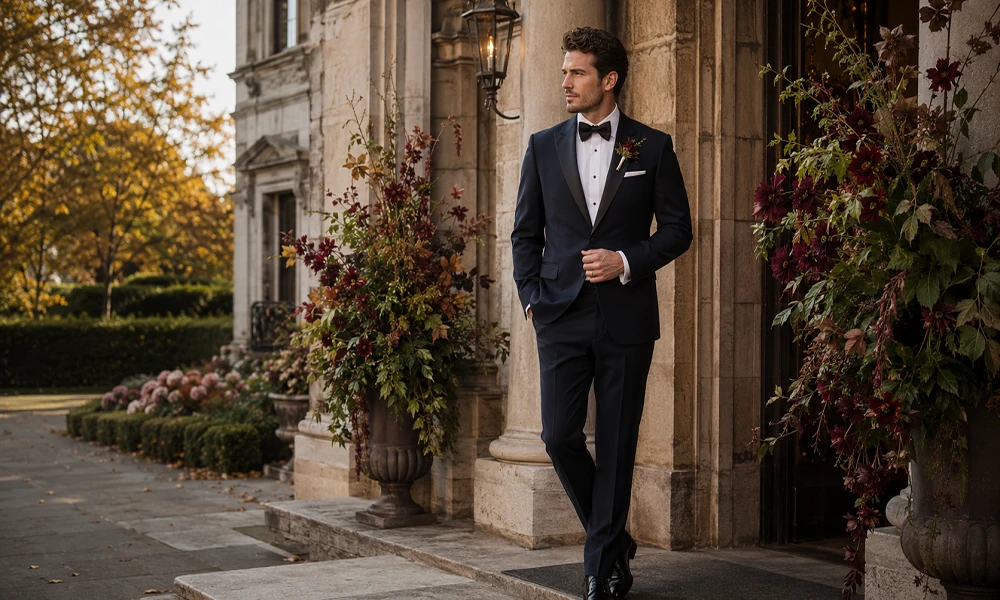
A tuxedo should feel connected to the celebration. Black may look sharp in a candlelit ballroom but severe at a sunny garden ceremony. Ivory can feel effortless beside the ocean yet out of place at a formal winter event. The right shade brings the venue, season, and wedding party into one visual story.
The goal is not to match every flower or table linen. It is to choose a color that respects the dress code, feels balanced in the setting, and remains comfortable from the ceremony through the last dance.
Begin With the Venue’s Character
The venue sets the strongest visual cue. Grand hotels, historic estates, and city ballrooms often suit black, midnight blue, or deep navy. Black remains the clearest option for a strict black-tie event, while midnight blue offers similar formality with softer depth.
There is history behind that choice. A midnight blue evening suit in The Metropolitan Museum of Art’s collection shows how the shade became an elegant alternative to black eveningwear. Under warm light, it can reveal tailoring details that disappear on black.
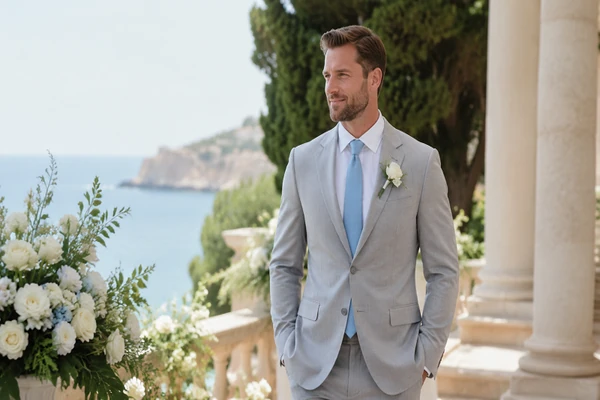
Outdoor spaces create more freedom: light gray and blue suit gardens, vineyards, and courtyards. At a beach or resort, an ivory dinner jacket with dark trousers can look crisp without fighting the airy surroundings.
Rustic venues can also support navy or charcoal when the event is formal, while tan usually creates a more relaxed suit-led look.
Couples comparing wedding tuxedo colors should study photographs of the venue at the ceremony time. Stone, dark wood, greenery, sand, and artificial light can change how fabric appears.
Let the Season Refine the Palette
Spring supports fresh, moderate shades. Navy, medium blue, and light gray work well with garden greens, pale flowers, and soft daylight. Black can still work when seasonal color appears in a bow tie, pocket square, or boutonniere.
Summer calls for visual and physical lightness. The National Weather Service notes that lightweight, light-colored clothing reflects heat and sunlight, a useful point for a hot outdoor ceremony. Light gray, soft blue, or an ivory dinner jacket can suit the season, but fabric weight and fit matter too.
Fall favors richer tones. Navy, charcoal, midnight blue, and black pair easily with burgundy, rust, forest green, and warm neutrals. The tuxedo should anchor those accents rather than compete with them.
Winter makes dark formalwear feel natural. Black is strong for evening ceremonies, while midnight blue adds dimension under warm reception lights. Deep green or burgundy can work, but statement colors need a simple shirt and restrained accessories.
Coordinate Without Looking Overmatched
Start with the overall palette, then choose one or two points of connection. The groom’s tie might echo a bridesmaid color, or a pocket square might pick up a floral accent. Exact head-to-toe matching often looks forced.
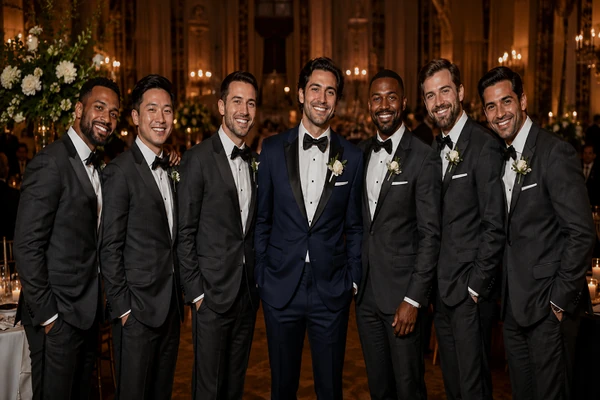
The groom may wear a distinct color while the wedding party stays in a related neutral. A navy groom with charcoal groomsmen creates separation without breaking the group. Another option is one shared color with a different lapel, bow tie, vest, or boutonniere for the groom.
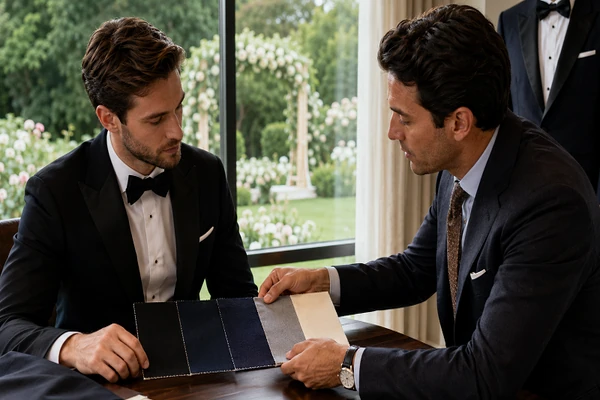
Compare physical swatches together. Two shades called navy may photograph differently, and ivory can clash with cool white bridal fabric. View the materials in daylight and warm indoor light.
The same test should include the shirt, lapel, tie, and key wedding-party fabrics.
Fit and Comfort Complete the Color Choice
A beautiful shade cannot rescue poor proportions. The jacket should sit cleanly at the shoulders, close without pulling, and allow movement. Trousers should stay secure while standing, sitting, and dancing. Ordering from one collection also limits variation in color and finish.
Grooms Club offers suits and tuxedos with four-way stretch, a stretch waist, fit guidance, customization options, and wedding-group coordination tools. These details help the chosen color look polished throughout the event.
Frequently Asked Questions
Must a groom wear black for a black-tie wedding?
Black is the traditional choice, but a very dark midnight blue tuxedo can also preserve the event’s formal character. The invitation, venue, and styling should all support the decision.
Should the groom’s tuxedo match the groomsmen exactly?
No. A related color, different lapel, or distinct accessory can identify the groom while keeping the group coordinated.
When should a tuxedo color be finalized?
Finalize it after the venue, date, dress code, and wedding palette are set. Leave time to confirm sizing and view the complete look.
Choose a Shade That Belongs in the Celebration
The strongest tuxedo color is the shade that belongs in the venue, suits the weather, honors the dress code, and gives the groom confidence. Explore Grooms Club’s color options and coordination tools to build a polished look for the groom and his wedding party.